Eye Correction
Ptosis Correction
Transforming a sleepy, heavy-lidded look
This surgery shortens the levator palpebrae superioris, the muscle that lifts the eyelid, so you can open your eyes wider than before. By applying the techniques of ptosis surgery, we transform your impression into one with soft, well-defined eyes.
About
What is Ptosis Correction?
A surgical technique that applies the methods of ptosis surgery
- Surgery that shortens the levator palpebrae superioris, the muscle that lifts the eyelid
- A surgical technique that applies the methods of ptosis surgery
- Effective for those with drooping eyelids or sleepy-looking eyes

Check List
Recommended for the following
Those troubled by sleepy, heavy-looking eyes
- Those with ptosis who have a problem in the muscle that opens the eye
- Those who cannot open their eyes properly for various other reasons
- Those whose eyes droop severely, making them look perpetually sleepy
- Those troubled by a dull impression, with heavy-looking eyes and a lifeless expression
Type
Incisional and Non-Incisional Ptosis Correction
The surgical method is selected based on the eyelid condition and the degree of ptosis
Incisional ptosis correction
Sagging eyelids · forehead wrinkles · fatty eyes
- Those whose sagging eyelids largely cover the iris
- Those who develop forehead wrinkles from using the forehead muscles to open their eyes
- Those who need correction of fatty eyes
Non-incisional ptosis correction
Mild ptosis · fast recovery · alternative to the buried-suture method
- Those whose ptosis is not severe
- Those who want ptosis correction with a fast recovery after surgery
- Those who cannot undergo the buried-suture method due to ptosis
Difference
Beauty Story's Ptosis Correction
Here is what makes it different
Beauty Story's ptosis correction does not let the line loosen.
With Beauty Story's ptosis correction, the levator palpebrae superioris is shortened so you can open your eyes wider than before. By applying this technique together with incisional double eyelid surgery to shorten the levator muscle at the same time, we can create both a beautiful double eyelid and larger eyes. With safe and effective ptosis correction, we can transform your impression.
At Beauty Story
- Less swelling and scarring
- A sleepy, heavy-lidded look becomes soft and well-defined
- Correction is possible even with severely drooping eyelids
- Less strain on the eyes even helps prevent forehead wrinkles
Effect
Benefits of Ptosis Correction
- 01
Transforms heavy, sleepy eyes into far more refreshed and well-defined eyes.
- 02
A method that manipulates the levator palpebrae superioris and Müller's muscle, which lift the eyelid.
- 03
Ptosis correction can be performed simultaneously during double eyelid surgery.
- 04
Transforms a dazed, tired, and unconfident impression into a clear and refreshed one.
Process
Ptosis Correction Surgery Process
The incisional and non-incisional surgery process
Incisional ptosis correction
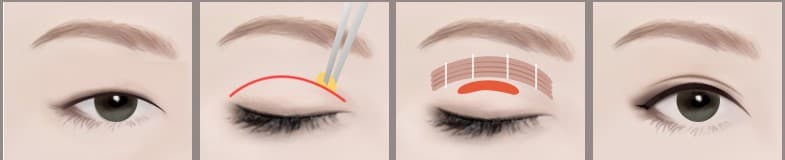
- STEP 1
Understanding the surgical principles through thorough consultation with a specialist
- STEP 2
Incision according to the design and removal of unnecessary tissue
- STEP 3
Tying and pulling the orbicularis muscle and tarsal plate so the eyes can open wider
- STEP 4
Completion of natural, well-defined eyes
Non-incisional ptosis correction
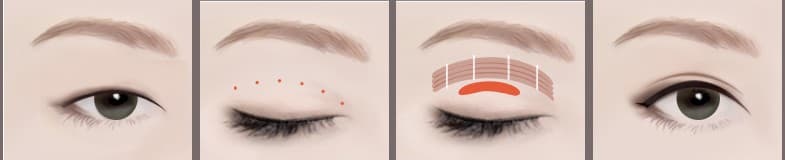
- STEP 1
Identifying the cause of symptoms through thorough consultation with a specialist
- STEP 2
Creating tiny openings in the eyelid
- STEP 3
Tying and pulling the orbicularis muscle and tarsal plate so the eyes can open wider
- STEP 4
Completion of natural, well-defined eyes
FAQ
FAQ
What kind of surgery is ptosis correction?
It is surgery that shortens the levator palpebrae superioris, the muscle that lifts the eyelid, so you can open your eyes wider than before. It is a surgical technique that applies the methods of ptosis surgery.
How do incisional and non-incisional ptosis correction differ?
Incisional ptosis correction is performed when sagging eyelids largely cover the iris or when fatty eyes need correction. Non-incisional ptosis correction is suitable for those whose ptosis is not severe and who want a fast recovery.
Can I have it together with double eyelid surgery?
Ptosis correction that shortens the levator palpebrae superioris can be performed simultaneously with incisional double eyelid surgery, creating a beautiful double eyelid together with large, well-defined eyes.
How long do swelling and bruising last after surgery?
Swelling and bruising may appear for 1–3 days after surgery but gradually fade over time. The degree of recovery may vary from person to person.
Is correction possible even with severe ptosis?
Correction is possible even with severely drooping eyelids, and the incisional or non-incisional method is chosen according to the cause and degree of the symptoms.
Caution
Post-Surgery Precautions
- 01Please refrain from taking medications that can interfere with hemostasis for 2 weeks before surgery.
- 02Swelling and bruising may appear for 1–3 days after surgery but gradually fade over time.
- 03Please be careful not to rub your eyelids vigorously.
- 04Please avoid squeezing your eyes shut too tightly.
- 05Please wear contact lenses only from 3 weeks after surgery.
- 06Please refrain from drinking and smoking for the time being.