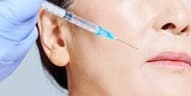
Botox
Effective for localized wrinkle improvement

beauty story, crafted by plastic surgery specialists
Sculptra
A magical transformation — skin that looks younger over time
Meet a collagen stimulator with enhanced volumizing strength. Unlike ordinary fillers that inject foreign substances, it produces collagen on its own to fill insufficient volume, wrinkles, and elasticity all at once.
About
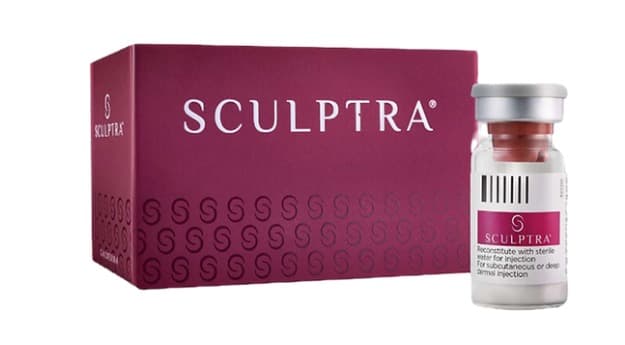
Sculptra's main ingredient is PLLA (Poly-L-Lactic Acid), a type of synthetic polymer derived from fruit components. Unlike ordinary fillers that inject foreign substances, it is a pure collagen stimulator that produces collagen on its own. You can expect natural volumizing results that build over time.
Principle
When you receive Sculptra treatment, your skin begins to change. Let's take a look at how it fills wrinkles and volume.
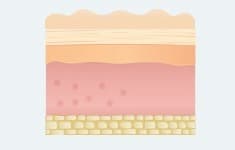
Wrinkles before treatment
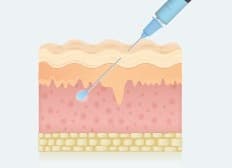
Injected Sculptra fills wrinkles and volume
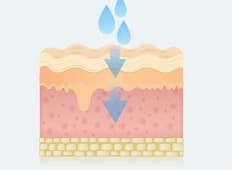
Wrinkles improve as moisture is absorbed into the body
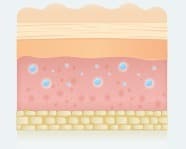
As PLLA breaks down, collagen production is stimulated
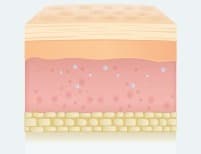
Noticeable results after about 5–6 weeks
Feature
Area

Check List
If you want natural, long-lasting volume without the burden
Compare
Unlike surgeries such as fat grafting, Sculptra requires no surgery, anesthesia, or recovery period. It is also possible for those who are too thin or for whom fat grafting is difficult due to hard-to-find subcutaneous fat layers.
Volume that keeps building over time is precisely what sets it apart from fat grafting, where volume diminishes over time.
Effective for localized wrinkle improvement

Effective for filling insufficient volume and correcting contours
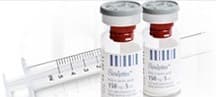
Restores facial volume and elasticity to improve insufficient volume and wrinkles simultaneously
Process
We will also assess whether Sculptra is suitable for you and consult with you in detail after diagnosis.
Consultation with medical staff
Treatment design by area
Sculptra treatment
Careful, area-by-area procedure
Guidance on post-treatment precautions
FAQ
It is an injection of PLLA (Poly-L-Lactic Acid), a biodegradable polymer that breaks down within the body. It is a collagen stimulator that stimulates the dermal to subcutaneous layers of the skin to induce the production of your own collagen.
The hydration sensation right after injection subsides within a few days, and from 4 to 6 weeks later your own collagen begins to build up. The results last a long time, up to 2 years or more.
It is best for gently restoring volume and improving the contour across the face as a whole, such as hollow cheeks, sunken temples, deep nasolabial folds, and loss of jawline elasticity.
If the drug does not dissolve properly or is injected in a lump into a shallow layer, nodule side effects can occur. Therefore, allowing sufficient hydration time, using accurate injection technique, and performing self-massage after the procedure are very important.
Yes, it is essential. To ensure the injected PLLA particles disperse evenly within the skin without lumping, you should gently massage the treatment area 5 times a day, for 5 minutes each, for 5 days.
For the layering effect of the collagen that builds up, we generally recommend about 3 consecutive sessions at intervals of 4 to 6 weeks.
Unlike HA fillers, there is no antidote (dissolving injection) that dissolves it instantly. Because it slowly breaks down into water and carbon dioxide within the body, the initial design and injecting an appropriate dose are very important.
Because a local anesthetic (lidocaine) is mixed in when hydrating the drug and a blunt-tipped cannula is used, the treatment pain tends to be minimal. Mild swelling and fine bruising may occur for about 2 to 4 days after the treatment.
The sense of volume right after the treatment is due to the fluid used to dissolve the drug (saline/anesthetic) and slight swelling. As this fluid is absorbed into the body within 2 to 3 days, it temporarily subsides, and from 4 weeks later your own collagen builds up to form the actual volume.
After washing your hands thoroughly, apply a moisturizing cream and gently push each area in a circular motion at a moderate intensity that does not cause excessive pain, so that the PLLA particles disperse evenly within the skin.